
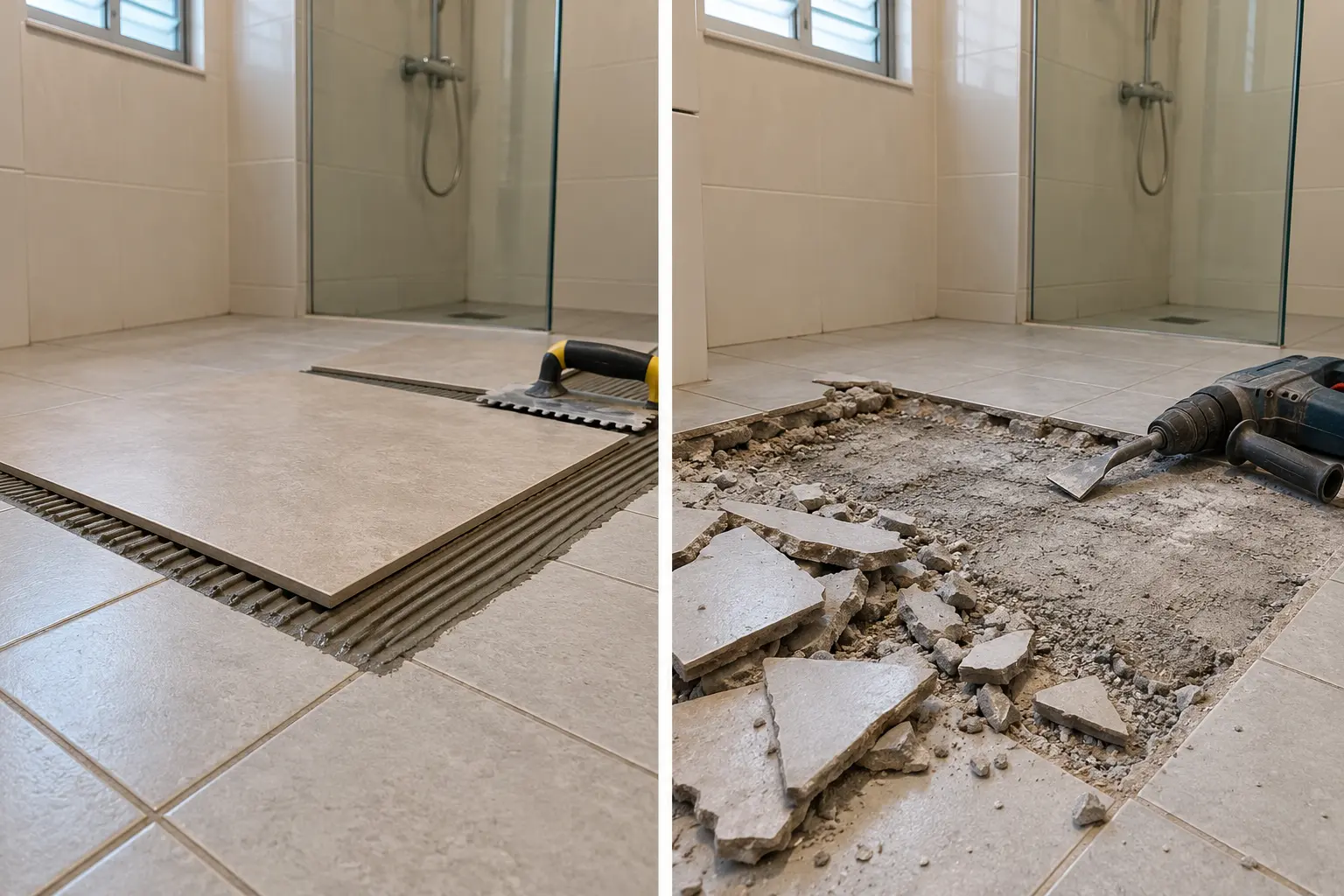
What overlay is
A new finish laid directly on top of the existing floor: tiles on tiles with a bonding agent, or vinyl planks over a sound, level surface. No hacking, no disposal of the old floor, no new screed, and far less noise and dust.
When overlay works
- The existing tiles are firmly bonded. We tap-test for hollow tiles; a few can be fixed, a floor full of them cannot.
- The floor is level enough for the new material. Vinyl shows every bump; tiles are more forgiving.
- The added thickness is acceptable at the main door, bedroom doors and the bathroom threshold. Doors can be trimmed; a step at the entrance usually cannot be hidden.
- In bathrooms, the existing waterproofing is sound. Overlay does not fix a leak.
When you should hack
- Hollow or lifting tiles across the floor
- A floor level that must change, such as removing a step between kitchen and living room
- Bathroom leaks or staining on the neighbour’s ceiling, which means the waterproofing has failed and must be redone from the screed
- Moving the floor trap or the WC position, which needs the screed opened
- Changing the layout with new walls on the floor slab
What it means for HDB permits
Both overlay and hacking of floor finishes need an HDB permit, applied for by a listed contractor. In newly built flats, bathroom and toilet finishes cannot be hacked for the first three years from the block’s completion; overlay and fitting changes are the route in that period.
Cost and time
Overlay removes hacking, disposal and screeding from the bill and takes the noisiest days out of the programme. Hacking costs more but gives a fresh, level substrate and, in bathrooms, new waterproofing that we ponding-test before tiling. We state which we have assumed on every line of the quotation.